
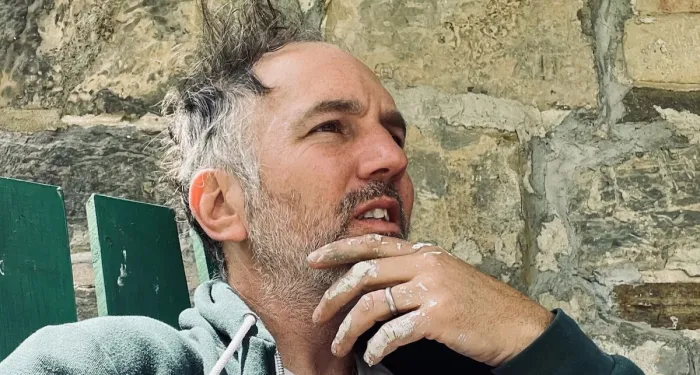
Walter Martin
Learn To Love Music More (and Confuse the Algorithms)
If you like music, you’ll enjoy it even more after this show. Indie rock star and radio host Walter Martin shares insights from an eclectic record collection spanning 40+ years
If you love music, you're going to love this episode.
But if you're somebody who maybe just "likes" music, you might get even more from this show. Because after you meet our guest Walter Martin, you'll likely find that you enjoy and appreciate songs a little bit more.
Or even a lot more.
I speak from firsthand experience.
I am not a musician. I don't play an instrument. And I certainly don't have an encyclopedic knowledge of songs, artists and genres.
But late last year, I discovered Walter Martin's work. And it has changed the experience of listening to music for me.
Through The Walter Martin Radio Hour, he shares his knowledge along with songs from a record collection he's compiled over 40+ years. Along the way he offers insights about the songs, why they work (or don't), and does this with a down-to-earth approachability, great sense of humor, and a lot of energy.
Thanks to Walter's work, I now find myself noticing or recognizing new sounds within songs — including ones I've heard hundreds of times before.
In our show today…
- Walter sits down to talk about his road from Indie Rock star to radio host.
- He'll take you on his journey from Washington D.C. to New York City to upstate New York, where he discovered his new passion.
- He'll explain how he learned to break free of past judgments about songs and artists he'd previously written off.
- And he'll share why he thinks this is a great time for new music, and introduce you to his favorite new musician.
I think you'll find Walter's outlook both refreshing and helpful. He's like having a friend with great taste and boundless knowledge curating playlists just for you.
To celebrate Walter's appearance on the show, we're giving away 20 subscriptions to Walter's Substack. Sign up here for your chance to win.
I hope you'll enjoy this interview, and Walter's insights, as much as I do. Thanks for listening.
[05:07] The Austin Kleon Connection: How two creators found each other through "the magic of the internet."
[07:29] From NYC to Upstate: The origin of The Walter Martin Radio Hour.
[10:16] The Classical Club: Why Walter is diving deep into Strauss and Stravinsky.
[12:07] The Organ Episode: Learning to hear the difference between a Hammond and a Farfisa.
[21:43] Breaking the "Teenage Rules": How Walter learned to love the Grateful Dead and Neil Young.
[23:52] Walter's Favorite new musician right now.
[28:57] Walter's Songs: Discussing "The Rat" and the autobiographical beauty of "The Soldier."
[31:33] Who's done a Crazy Good Turn for Walter?
FRANK BLAKE:
I'll start by the theme of this show, of this podcast is people who do crazy good things for others. And, there are… Every once in a while I go, "Gosh, there's somebody who's doing something so brilliant with connecting to people digitally, through the internet, a blog," or whatever it is. And one of our guests was Austin Kleon.
WALTER MARTIN:
Oh, yeah, yeah.
FRANK BLAKE:
So him, that's how, through one of his recommendations, he is a fan of yours. I go, "Well, gosh, if he thinks this is worthwhile, I got to check this out." And since then, everybody I talk to I go, "God, you've got to listen to the Walter Martin Radio Hour and the Substack."
WALTER MARTIN:
Well, that's so nice. Thank you. Yeah, Austin's been a great supporter of my work. I love what he does. It's just-
FRANK BLAKE:
Absolutely.
WALTER MARTIN:
I have very little contact with people on the internet, but I really respond ... Maybe it's just I don't respond to that much stuff on the internet, but I really respond to what he is always doing. It's wonderful.
FRANK BLAKE:
So what was the connection there? Or is it just you both found each other through the magic of the internet?
WALTER MARTIN:
Well, it's funny. He actually took pictures of my old band The Walkmen.
FRANK BLAKE:
Right.
WALTER MARTIN:
And then I've used pictures that he took that I found on the internet for an old Walkmen website. Then he wrote some nice stuff to me about an album of mine that I made and we just, I don't know, started communicating a lot.
FRANK BLAKE:
Well, I think the two of you are great examples of people who are using the ability to connect through modern technology in a way that actually makes life better for everyone.
WALTER MARTIN: Well, thank you.
FRANK BLAKE: Just congratulations on that.
WALTER MARTIN: That's nice. Well, thank you. Yeah. Thank you.
FRANK BLAKE: You'll see, this isn't going to be a good interview because I'm too much of a fan to give a good interview. But I like that your header for your website, which is Toe-Tapping Music for Desperate Times, or horrible times, or something like that.
WALTER MARTIN: I think it's a Toe-Tapping Diversion from the Horrors of Our Times.
FRANK BLAKE: Right, yeah. So well said, brilliantly said.
WALTER MARTIN: Thank you.
FRANK BLAKE: So let me start, and people will be aware of your great career, continuing career as a musician. What was it that prompted you to do the Radio Hour, and then Substack?
WALTER MARTIN: It's funny. I started doing it just as a thing. Honestly, after we moved upstate, I stopped seeing all my musician friends as much. I don't go on tour that much with musicians anymore. So I think I just had a hankering to talk about music the way that I have for my whole life. So I started this thing on Instagram where on Fridays, I would just have a live session where people could join me and I would just talk. I would play records from my record player and just talk about them basically, and have people talking to me and interacting with me. I don't know, it was a Friday afternoon activity that replaced a social life that I left behind a little bit in New York City. And I started really loving doing it and people seemed to enjoy, liked the records that I played. I don't know, it grew out of that. It definitely grew out of that and me realizing how much I liked doing that. And people telling me, "Oh, I never knew that," whatever, "Bobby Darren was a songwriter before," and stuff like that.
FRANK BLAKE: Right.
WALTER MARTIN: Little details of music history that, for some reason, have stayed in my brain. So, I don't know. Yeah, then I started ... somebody's Substack, a really nice guy approached me about turning it into a Substack and I thought, "Sure, okay." So I did it. And I do it on the radio up here. There's a radio station, WEXT, which is a great radio station-
FRANK BLAKE: Yeah, out of Troy. Yeah.
WALTER MARTIN: Yeah. So I do it through actually a friend of my daughter. I ended up doing it through, it runs every Sunday night on WEXT up here. Though I have to edit it differently and I often forget to send them episodes. But yeah, it just has grown out of that and I think I've come to really love it as a creative outlet. So I'm just spending a lot of time on it. FRANK BLAKE: Well, one of the things ... So I've got to start by saying I don't play any instrument, I'm not a musician-
WALTER MARTIN: Okay.
FRANK BLAKE: ... in any form. But I say to people about your Substack that if you liked music at all, you have to listen to this. And your range of interests is so broad. Has that always been true through your musical career, that you just span such a wide range?
WALTER MARTIN: I think that a lot of people who really ... I started listening pretty hard to music when I was pretty young, when I was in my early teens. Yeah, I think that it's just a process of getting ... I've always wanted to have something new and getting sick of things, and being thrilled by the feeling of finding something new, so always looking for more new stuff. Then after however many years of that, 40 years of doing that, you end up with stuff that is all over the world and from all different kinds of music. I'm certainly not an encyclopedia. I do that classical music stuff, Classical Club I call it.
FRANK BLAKE: Which is brilliant, by the way.
WALTER MARTIN: Oh, thank you.
FRANK BLAKE: Stravinsky I knew a bit, but I really had never listened to much Schumann, and never listened to much-
WALTER MARTIN: Strauss.
FRANK BLAKE: ... Strauss.
WALTER MARTIN: Yeah.
FRANK BLAKE: And it's just fascinating.
WALTER MARTIN: Yeah. Like I say, I'm not joking when I say in that that I'm really trying to just learn more about it and, I don't know, let people join me as I'm poking around and figuring out these different composers. That's really what I do. I like to go heavy into one person at a time because, I don't know, it's a way of getting it to sink into my brain better. So yeah, I don't know, I think I just have a huge appetite for music because I like having it on all the time, so I'm forced to find more and more stuff that I like.
FRANK BLAKE: Well, I would also say you make it very fun. And for people like me who don't know a lot, I do things like ... For our listeners to be aware, you'll do an episode on organs.
WALTER MARTIN: Yeah.
FRANK BLAKE: I never thought much of organs. There's organ music in the background, and then all of the sudden...
WALTER MARTIN: Yeah, sure. Exactly.
FRANK BLAKE: What prompted that? I know you played the instrument, but it was a phenomenal, phenomenal episode.
WALTER MARTIN: Really, I've been playing in rock bands since I was 11 or 12.
FRANK BLAKE: 11? 11 in a rock band?
WALTER MARTIN: Oh, yeah, yeah, yeah.
FRANK BLAKE: Wow.
WALTER MARTIN: I started in the fifth grade. And it's really basically been the same guys, two of whom were at my Thanksgiving just last weekend, who I started playing with them in seventh grade. Anyway, yeah. I don't know, it's a funny process. And, uh…
FRANK BLAKE: Well, the great thing is as a listener, you learn and you're entertained at the same time. I got the sense that you're quite an expert on that, more than just-
WALTER MARTIN: Yeah. Like I was saying, being in a band forever, you learn all the instruments, you learn the ins and outs. Like with the organ episode you were talking about, I just thought it would be funny to ... It's just such a specific little pocket of music history that I happen to know about. I guess my challenge was to see if I could explain all the different kinds, not all the different, but the most important kinds of organs in rock and roll, and jazz, and pop without boring people.
FRANK BLAKE: Yeah, it definitely is not boring. In fact, it's the opposite, which is what, in my opinion, the great discovery process for all of us is that you listen to something like what you did on the organs and then your ears are attentive to things you never would have noticed otherwise.
WALTER MARTIN: Honestly, that's so wonderful to hear. That really is my desire. That's what I fantasize about. People have been writing me since the organ episode saying that, "Oh, they were listening to some song and they recognized that it was a Hammond organ with the Leslie on it fast."
FRANK BLAKE: Yeah.
WALTER MARTIN: I don't know, it's a dumb little thing to think about, but there are worse things to think about. I just find it fun to notice those things.
FRANK BLAKE: It's fabulous. And then every once in a while, if I can drop, "I think that's a Farfisa in the background there."
WALTER MARTIN: Yeah, that's good, right?
FRANK BLAKE: Right, right.
WALTER MARTIN: It feels good, yeah.
FRANK BLAKE: Very good. So as you're putting these together, to me it feels like this must really take a lot of work.
WALTER MARTIN: It does. It actually does, yeah. Especially more now, I think because I'm becoming more and more obsessed by it. That it's less just casual listening and it's more like I want to tell a story and use the music to try to tell it. Like the organ episode, for example.
FRANK BLAKE: Right.
WALTER MARTIN: To tell the story of the music, of organs in popular music. It's fun to loosely figure out the arc and then spontaneously put it together. But it does take a bunch of work, yeah. I just did an episode on hand claps. FRANK BLAKE: Yeah. It's a wonderful, wonderful episode.
WALTER MARTIN: I like focusing on funny little, I don't know, random details that are very easy to overlook. Yeah, planning it out, I have a fear of missing the great hand clap songs. I want to make sure that I do my research first, then I just blurt it all out.
FRANK BLAKE: And as you're going forward in this, how do you see this fitting in the larger arc of your musical career?
WALTER MARTIN: I don't know. Ever since I've been a full-time musician, since I was 19 I guess, I never have that much of a plan in place. I had my bands, which thankfully both did well enough to support me. And then I started doing solo music, I made a lot of film and commercial records and things like that. And never much of a plan. Honestly, never much of a plan. I hope my children aren't listening to this. I don't know. I feel like I'm a bad planner and I'm bad at career strategy, and stuff like that. I think I'm decent at understanding what my strengths are. I try to only play to my strengths. And I feel like I do know a lot about music and instruments, and it's certainly a fun thing to talk about. And it's funny. I think the reason I'm always laughing on my show is because there's something absurd about the whole concept to me.
FRANK BLAKE: Right.
WALTER MARTIN: That I'm sitting here in my studio in Upstate New York, talking into a microphone about rock and roll music. To me, it's a given that the whole thing is absurd. So I don't know, something about the balances of absurdity, and of real music content, and of real beauty, and of all that kind of stuff, the balance is perfect for me and I feel like, "Okay, I'm just going to spend a lot of time doing this."
FRANK BLAKE: So there is a theory of the case for artists, that your audience is an audience of one, what really delights you. Is that how you look at this, or do you have an audience in mind that you're trying to reach?
WALTER MARTIN: It's funny. I think more and more recently, I have more of an audience in mind that I'm trying to reach. This is whatever, the thought processes that I go through, but I'm really trying to not think about that. Sometimes I'll think of an episode that I think will be really weird and funny, and sometimes I worry, "I don't know if a lot of people will like that." I really don't like that instinct.
FRANK BLAKE: Right.
WALTER MARTIN: So that's definitely something that I have to battle with a bit because, yeah, there are just so many different things that I want to cover and I really wanted to bring more people in. So when I do weird episodes like the organ episode, or like the whatever, specific little things that I like to focus on, that people have already been welcomed in. That's why when I do those ones that sound a little bit more obscure, I do try to make them as, I don't know, as user-friendly and as welcoming as possible.
FRANK BLAKE: You do a great job.
WALTER MARTIN: Well, thank you.
FRANK BLAKE: Again, as someone who's not a musical expert in any sense, you do a great job of welcoming us in to people who really know this, but you make it very approachable. So congratulations.
WALTER MARTIN: Well, thank you, I appreciate that. That's the goal, yeah.
FRANK BLAKE: So let me ask you, you did a show on Springsteen coming off of the movie. And you also referenced the movie on Dylan.
WALTER MARTIN: Right.
FRANK BLAKE: Do you have a point of view on can there be good biopics on musicians, and what makes it good? Or what makes one good and what makes one not so good?
WALTER MARTIN: So much of it I think has to do with, I don't know, the viewers' relationship with the artist. When I watched the Bob Dylan one, I don't know, I'm just so close to that stuff and I know it so well, and I know all the little stories. I know, whatever, what scarf he was wearing when he was first in Greenwich Village. So to have the most famous story about him told isn't that fascinating to me. I did an episode about that one and I think that-
FRANK BLAKE: Right.
WALTER MARTIN: ... I did love that movie for the fact that it was really well done. And while it maybe wasn't something that was ... I just don't think it was for me. It wasn't for a die-hard Bob Dylan fanatic. But I think of I have a nephew who's a musician, he's 20, he doesn't know anything about Bob Dylan except that I love Bob Dylan and that my mom loves Bob Dylan. So for him to go and see that, and see this kid from the Midwest having the nerve to do what he did, and breaking all the rules, and being an artist on his own terms and never changing. He was wowed by it, he was inspired by it. So for that reason, I love it. And I enjoyed watching it, I like a movie, but I didn't take it that seriously. But yeah, there aren't of ton of biopics. I like the Johnny Cash one, actually. I thought that was pretty good.
FRANK BLAKE: Yeah, okay. Yeah, that is great, and great music as well. What is it ... One of the things I really enjoy is that you'll talk about artists who you've reconsidered, whom you've reconsidered.
WALTER MARTIN: Right.
FRANK BLAKE: Who you started like, "Ah, this music isn't any good," and then go, "This is brilliant." What are some notable examples of artists that you've gone through and said, "I didn't start out liking these folks, but they're great?"
WALTER MARTIN: Yeah, it does happen to me a lot. I think just because growing up in bands and growing up as a musician, you're trained to be very judgemental. Especially when you're a kid, a lot of your identity is defined by, "Oh, I like this band, but I don't like that band. I like the Velvet Underground, but I hate the Grateful Dead. I wear black and I don't wear, whatever, flip-flops." So a lot of those rules were hard for me to break because they were a big part of my identity when I was whatever, a teenager and in my 20s. So it was really nice to mature out of that and to realize there was a world of music that I had shut off to myself. And it allowed this whole world of music, of great music into my life. So I think of things like the Grateful Dead, actually. That I dismissed because of, I think a lot of it is because of who liked it, which is obviously the dumbest reason.
FRANK BLAKE: Right.
WALTER MARTIN: And I think I dismissed somebody like Neil Young because I didn't like ... I don't know, I think it was the album covers and the amount of brown, the browns, you know, the '70s. And some of the chords, I don't know, musically just some of the chords that he used were just ugly to my ear. But now I love them. I don't know, for me it's just always thrilling when you really disliked something and the moment you realize that you were wrong. I don't know, it makes you love it more. What do they call it? Like a meet cute in a movie.
FRANK BLAKE: What do you think leads you to want to share your experience of music with others? And why do you think it's important to share that experience?
WALTER MARTIN: I don't know. I've always had that thing where, when I discover something and I know that my friends don't know it, I can't wait to play it for them. I want to make sure we have a good sound system and that I can wow them. It's just a thrill, it's a really great feeling. So for some reason, I've always liked doing that, and I think part of my motivations for finding stuff has to be, "I'd kind of like to play this for blah, blah, blah," for my friends. That's really I think what I'm trying to do with this show.
I don't know, I just feel like especially these days with all the information in this world, and also with the way that people get their hands on music, with the streaming services, it's just endless. There's so much. You can access all the music in the world just on your phone. So I think it's paralyzing for people and I think people ... People just go to the, I think to the Spotify playlists or to whatever, but not all people. I know a lot of people rely on algorithmic stuff to provide the music. So I guess just I'm trying to do the opposite of that and to have the most human and, I don't know, whatever, weird human humorous approach to getting people into listening to good music.
FRANK BLAKE: I actually, I think that's a brilliant cause.
WALTER MARTIN: Oh, good. Well, thank you.
FRANK BLAKE: The algorithms are ... I'll say, even with people who do great radio shows, and there are great radio shows that I like listening to, but they will be genre-limited.
WALTER MARTIN: Right.
FRANK BLAKE: A specific thing. As I said, you're not going to hear Tom Waits and Burl Ives in the same show.
WALTER MARTIN: Right.
FRANK BLAKE: And that's I think one of the things that makes what you're doing so, both interesting and compelling, because you're taking us from things that never would otherwise be aware of. It's music that I ... Jazz, God, jazz. How does that connect with anything? And then you listen to something and you go, "Oh, that's brilliant."
WALTER MARTIN: Yeah, I've been wanting to bring in more jazz. Jazz, I think it's just another hangup that I have. I have a fear. Listening to bad jazz radio, I have a deep, deep fear of being bad jazz radio. Just because jazz people know jazz, it's like talking about classical music. Jazz people know jazz so well.
FRANK BLAKE: Right, right, exactly.
WALTER MARTIN: And I don't. I know what I love, but for me to be talk, I feel like I'm in over my head. But I do love so much of it that I do want to try to incorporate what I know and love more.
FRANK BLAKE: As open as you are, and just your conversation that you have with your listeners is fantastic, are there guilty pleasures in music that you have that you're still reluctant to, "Oh, gosh, these guys are great," just because you're worried about how it'll come off?
WALTER MARTIN: That's a good question, actually. That's like a soul-searching question. I wonder if there is, subconsciously down in there. I don't know if there actually is because I love talking about embarrassing stuff. If I could find more embarrassing stuff that I do genuinely feel in my gut that I love, I would love to play it. I don't know. There's a lot of stuff that I really don't like that I don't like to talk about that I know a lot of people do like. But I try to keep it positive, I don't like to just go around trashing bands. But I think like I've said on episodes, sometimes there's maybe an assumption if I'm not talking about certain bands or certain artists that it's because I don't like them. I do try to hide that stuff.
FRANK BLAKE: You must have just a massive record collection.
WALTER MARTIN: I do, yeah. Most of it's here, yeah.
FRANK BLAKE: Yeah, just incredible. Are there a couple of your records that have particular significance to you, either because they're rare or a moment in time?
WALTER MARTIN: Yeah, definitely. I have many that are very sacred little copies. I have some that are autographed. I have Lou Reed sign my copy of Velvet Underground White Light/White Heat. And I have Michael Hurley, who's one of my heroes, I got to meet him and he signed a record for me. And then actually, I played organ on this session with Bob Weir from the Grateful Dead with some of my friends from The National. It was in California and I brought my copy of Anthem of the Sun, the second Grateful Dead record, and I had him sign that for me. And he wrote, "Hey now, Walt, Bobby Weir." So I treasure that one. But I also have ones that I know that I bought when I was 15 that were major ... I have my first Velvet Underground record that I bought when I was probably 16. Yeah, I have definitely probably 100 or so that are in the very, very sacred category.
FRANK BLAKE: Yeah, very cool. So unfair question. Who are your favorite new musicians now? Are there musicians now that just inspire you to say, "Those folks are brilliant?"
WALTER MARTIN: Yeah, there definitely are. I think my favorite one is probably this woman Adrianne Lenker who's from that band Big Thief. She's their main songwriter and she also does a lot of records on her own. And I think that she is really fantastic. I think Cate Le Bon, who's a Welsh singer who just put out a new record, I don't know, a couple months ago, is really fantastic, too. There's really a lot of great music being made these days. I really like SZA. I don't know if it's pop, it's R&B. It sounds so arty and weird that I can't believe it's pop, but I think she's fantastic. I don't know, there's a lot. Off the top of my head it's hard, but those three. There's a lot of experimental jazz, I don't know if it's called jazz. But this guy Sam Gendel and this guy Blake Mills in LA, who I just saw perform in Brooklyn, who are really the avant-garde, pushing music forward in ways that are ... I can't really get my head around what they do, but it's very abstract, but somehow very thrilling what they do. There really is a lot of great music being made really today.
FRANK BLAKE: Well, and to highlight your show, you call out a lot of it.
WALTER MARTIN: I try to, yeah, yeah, yeah.
FRANK BLAKE: You do a great job of that. When you were performing a lot live, did you like touring?
WALTER MARTIN: No. I did for maybe a month. No, I did until I was maybe 25, I think I did. Maybe I didn't, no. Maybe until I was 22. But then I didn't love it. It's a lot of work, it's a lot of travel, it's a lot of time away from home. And especially once I met my wife, it's so disruptive. It's so hard to have a regular life. And even when you're home and you know you're going away in two weeks again, or you know you're going away in a month again, it's not a lifestyle that I love. I did it from when I was 19 until I was about 39 a lot, and then now I do it here and there. But now when I do it, it's more of a novelty. But yeah, I think once I realized that it was really the writing, the songwriting that I loved, I particularly was like, "I got to figure out a way to just not go on tour and try to just write." Which it's hard, it's a challenge.
FRANK BLAKE: Yeah. Yeah. Does this fit? Does your show fit with the writing process? Or are they in opposition to each other?
WALTER MARTIN: Unfortunately, they're kind of in opposition to each other because I think it scratches a very similar itch for me. The songs that I really have been writing for the past five years or so, they're more ... I try to just tell stories and be myself and be ... I don't know, there's a lot of humor in my songs and there's a lot of, I don't know, real life stories in my songs. My songs I feel like are not that different from, honestly, from my radio show. So it's funny. I'm like a runner and I think a lot of ideas when I run, and I notice when I run these days, the ideas that I have are all for funny episodes of the radio show or funny things to talk about on the radio show. Whereas two years ago it was like, "Oh, that would be a funny thing to put in song," or, "That would be a funny line to finish that verse," or whatever. So I don't know. I think I'm just following what my brain is currently interested in.
FRANK BLAKE: Have you been pleased with the response to your Substack and show?
WALTER MARTIN: I have, yeah.
FRANK BLAKE: You should because, because every time I look, I'm thrilled to see that it's rising and picking up more and more subscribers.
WALTER MARTIN: Yeah. Yeah. It's just all kind of, like I was saying, it's kind of funny. I just never thought that I would ... It feels very natural to me suddenly, but I'd never imagined I would be spending a lot of time doing this, though now I feel very at home doing it. And I'm thrilled that people seem to be liking it. And I love hearing feedback from people about, yeah, like about what we were talking about, the organ episode, picking out a Farfisa. Or just people sending me songs, a lot of people send me songs which is really nice. Or songs that they think I would like. People are mailing me records too, which is great. So I love the interaction with the music obsessed people, and then with people who don't know much about music and they feel thrilled to know little interesting pockets of music that they may have easily missed.
FRANK BLAKE: That's interesting. So is most of the feedback you get from the music-obsessed, or the people like me who just go, "Wow, this is eye-opening or ear-opening?"
WALTER MARTIN: I think it's probably about half-and-half.
FRANK BLAKE: Okay, yeah.
WALTER MARTIN: I get corrections, too. That's how I can tell they're the music-obsessed. But yeah, I'd say it's about half-and-half. But I think the music-obsessed people are more eager to ... Sometimes I'll get a date, I'll be wrong about which year some song was released, though it's usually not that far off. But people will definitely correct me. Or I'll credit a songwriter wrong. I like doing that. I don't do it on purpose, but I do like that it gets people thinking and gets people wanting to write to me and correct me. I have learned a lot from people. I've been meaning to do an episode about corrections, about things that I've gotten wrong that people have corrected me on. I just haven't gotten around to it.
FRANK BLAKE: So there will be a lot of listeners who already will be familiar with your work. For those who aren't, and if you were to say here are a few songs, from either your solo career, your band career, that you're particularly proud of or that you think are the most accessible, or however you'd say, "Listen to these three or five songs?" Which would they be?
WALTER MARTIN: Well, I think the most popular song I've ever been involved in is a song called The Rat by The Walkmen, which I wrote with my friends. My dearest lifelong friends. That's the band that really started when I was, I think of it as starting when I was 12 basically. And we just did a reunion tour two years ago. But I have a song called The Rat, that was from when we were in our 20s. It's a young person, aggressive rock and roll. But as far as the stuff that I'm most proud of of my own work, it's probably I have autobiographical songs that I think strike the right balance of being funny and whatever, and true to life. I have a song called I Went Alone on a Solo Australian Tour, which I think is maybe my favorite song that I've ever done. And I have one called The Soldier, which is about ... It's a tribute to a dear family member. Yeah, that's probably my favorite song I've done. I like the long, weird, true life story ones that have some jokes in there.
FRANK BLAKE: And looking at your time in the music industry, and now looking at it just as an industry, do you go, "Ah, I'm pretty pleased with where things are trending?" Or do you go, "Whoa, am I troubled by where things are trending?"
WALTER MARTIN: I don't know. I don't think about it a ton I guess. Yeah. I've for better or worse always operated a bit outside of the mainstream of the music industry. Not necessarily by design, but just I think by the kind of music that I've always made and been interested in. Yeah, the streaming thing makes it really hard for musicians to get paid, unless you really want to go on tour. So that stuff is hard. I don't know, I think it's good for music in that there's so much access to music, and I feel like there's just so much great music that you can just throw on so easily that I feel like that's a wonderful thing. I don't know. I feel very hopeful about the music industry and about ... I don't know about the music industry, but I feel very hopeful about music because I think it's in a really good place. Whereas I feel like the '90s I think of as the big boom of the music industry, when they were printing CDs and they were just printing money essentially. And I think of the '90s as being such a crummy decade for ... Obviously, there are exceptions for music. I feel like now, while maybe artists are struggling, there's at least a lot of great stuff being made.
FRANK BLAKE: Yeah. I always ask on this show for every guest, I ask a question on whose done a crazy good turn for you? So if you look at your life, is there somebody who's just done something exceptionally kind for you that made a big difference?
WALTER MARTIN: It sounds kind of silly, but I think I would have to say my parents. I think that I'm a very lucky person in that I have two really nice parents who happen to be healthy. I respect them a lot, and they're very different people. There's things about both of them that I idolize and want to try to emulate. So yeah, in a lifetime of being with them, yeah, there are many things that I should be thankful to them for. It sounds kind of corny, but just for them being who they are has been the biggest thing for me in my life.
FRANK BLAKE: That's great. That's terrific. Well, I got to tell you, I love your show.
WALTER MARTIN: Well, thank you.
FRANK BLAKE: I do everything I can to express how terrific it is and encourage other people to listen to it.
WALTER MARTIN: Well, I appreciate it. That's so nice.
FRANK BLAKE: It's a crazy good turn you're doing for others I think.
WALTER MARTIN: Well, thank you. I really appreciate it, and I appreciate you listening and spreading the word about it. And I'll spread the word about this podcast, too. That's so nice of you.
FRANK BLAKE:
Well, thank you.
Enter to Win a FREE 1-Year Subscription to The Walter Martin Radio Hour
To celebrate Walter Martin's February appearance on Crazy Good Turns, we're giving away 20 yearlong subscriptions to his Substack -- FREE.
Each subscription grants you...
- Full access to all episodes of Walter's weekly radio show
- Additional access to special "deep-dive" podcasts
- Classical Club, which is like a book club for classical music
- Walter's playlist archive
- Additional playlists weekly
- Even more premium content
From Frank
My Sincere Thanks
Because of listeners like you, our show now ranks among the top 5% of most-downloaded podcasts by volume per month.
Your support has helped take our little idea to celebrate generosity and good deeds, and turn it into one of the most listened-to podcasts available.
Thank you for being part of a community that celebrates people who do good things for others. Your giving of your time to listen to these interviews, and acknowledging those good deeds, is a crazy good turn of its own.
Please help us continue to grow by subscribing on your preferred podcast platform.
And please, help us spread the word by sharing our show and website with friends.