Lindy Wood
A Ranch for Young Adults with Autism
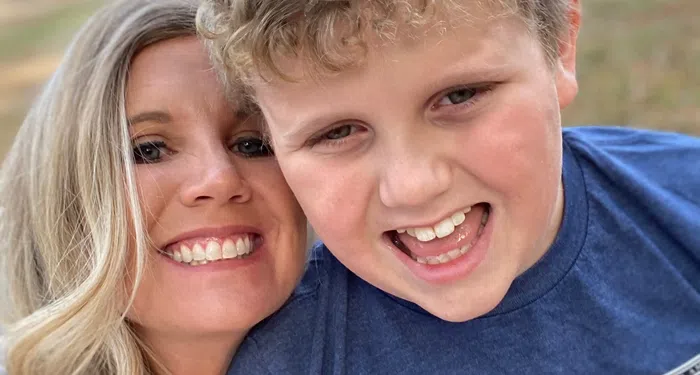
Lindy Wood founded Westonwood Ranch after her son's autism diagnosis. Today, her 10-acre Florida farm helps neurodivergent young adults learn job and life skills.
Her name is Lindy Wood, and she's the founder of Westonwood Ranch. It's a 10-acre working farm in the Florida Panhandle where teens and young adults with autism learn job and life skills.
The idea for the ranch first came to Lindy nearly 15 years ago, when her then-two-year-old son Weston was diagnosed with autism.
That diagnosis was devastating at first. But then Lindy began to see something larger.
She was doing everything she could at the time to assist this young boy. But she recognized that, on a long enough timeline…
…her son was headed toward a cliff.
In fact, those in the community call it the "services cliff."
It's the point where society stops providing resources for those with autism or Intellectual and Developmental Disabilities.
It usually arrives just after high school. And it ends with something like 85% of those with autism being excluded from the workforce, according to the Department of Labor.
Although Weston was still just a young boy, Lindy saw all of this coming.
So she decided to do something about it.
And her path to building Westonwood Ranch began.
During our interview, Lindy and I will discuss:
The moment she realized there was no real plan for Weston's adulthood
- Why the services cliff is such a frightening reality for parents of children with disabilities
- How Westonwood Ranch grew from four young people to a full-time program serving 60, and what life is like on Westonwood Ranch today
- Why learning to use a microwave became such an emotional milestone in her own family
- And the many crazy good turns that helped bring this mission to life — including one gift that Lindy could hardly believe
Longtime Crazy Good Turns listeners will know that autism is something we've talked about a lot on this show.
We've featured other organizations like Ken's Krew and the Precisionists, who help those with IDD to find meaningful work.
Westonwood Ranch belongs in that same conversation.
It is a remarkable place. And Lindy Wood is a remarkable person.
I came away from this interview inspired by the power of her faith.
I think you will be too.
- [04:12] The Diagnosis: How a 2-year-old's diagnosis sparked a much larger, lifesaver vision.
- [07:45] The "Services Cliff": Why society stops providing resources just when those with IDD need them most.
- [12:30] Building Westonwood Ranch: How a 10-acre working farm went from serving four young adults to 60.
- [19:15] The Microwave Milestone: Why small achievements are massive emotional victories for families.
- [25:40] An Unbelievable Turn: Lindy shares a "crazy good" gift that changed everything for the ranch.
- [31:10] Finding Meaningful Work: Lessons on neurodiversity, inclusion, and the simple dignity of labor
FRANK BLAKE: Lindy, welcome to Crazy Good Turns. It's great to have you here as a guest and want to thank you on behalf of all of our listeners for what you're doing. Let me start. Where does this find you today? Where are you?
LINDY WOOD: We are located in Freeport, Florida, which is the Panhandle, in the Panhandle. Yeah. I'm originally from Alabama and when I share a little bit more of my story, we were led to this area just from the pathway that we were led to start this mission of Weston Wood.
FRANK BLAKE: Well, I know we're going to get into that and maybe we'll get right to the founding story behind Weston Wood Ranch. You have a family, one of your children is diagnosed as autistic. Maybe you can give the full background to our listeners.
LINDY WOOD: Yeah, of course. Frank, I think about that time and my husband and I were high school sweethearts. You think when you're young and you're newly married, you have your whole life planned out. Well, we had our first two children and our third child came along and we started noticing some delays developmentally. And right before his second birthday, it was just kind of obvious to me that he wasn't developing speech and had some behaviors that just weren't typical. We were in denial a little bit for a while because you always see these parents that have children with special needs and you look at them in awe. You're like, "Oh gosh, God gives these children to the parents that can handle them." And we were given this beautiful child, but I felt ill-equipped. I felt like I didn't ask for this. I always felt like these children were given to families and I was so far removed from that.
And here we are, we have this child. And I remember really just feeling, I said, "God, let this be anything but autism because autism is a lifelong disorder." And to me, it was a diagnosis I wasn't emotionally prepared to receive. And sure enough, we did receive that diagnosis. And at the time, we were told all the things that we should not expect our child to do, don't expect your child to speak. And you were handed a sheet of paper that had all these multiple therapies and that really shifted my perspective of everything. I felt like in that moment that I was grieving over a life that I thought my son was going to have, that I felt like was kind of taken from him. And it just was a really, really hard thing to wrestle with, really, really hard.
And we lived in a very, very small community in Alabama. There were no resources there. And I packed up and we got a home in Birmingham, Alabama and I had my son in one-to-one therapy all day during the week and I would drive back home and my husband was raising our other two children. Talk about a strain on the family. But one thing that I was committed to doing when I received this news is that I'd never wanted to look back and say that I didn't try everything I could do as a mother to make Weston's life as full and help him rise to his fullest potential. I was committed to that. And so of course, any new mom that receives that diagnosis, you're researching everything, you don't want to leave any stone unturned. We did biomedical, we did this, we did this therapy. And I think looking back that maybe my reality, I was hoping that he was going to be the one that just magically started talking or that all of a sudden stopped injuring himself.
I did. I had that vision and of course he made progress, but it wasn't anything what in my mind I had kind of latched onto. And I think we all, when we're given things in life, hard things or illness, it doesn't matter what it is, we wrestle with that. I did. I wrestled with my faith and just heal my son of this, God. How can a child go through his day with so much angst and harm to himself? And just everything about our world is just too much for these children. And it was heartbreaking. And I did-
FRANK BLAKE: Excuse me, Lindy, but is Weston largely nonverbal or was he at the time? It sounds like-
LINDY WOOD: He is.
FRANK BLAKE: Yeah. Yeah.
LINDY WOOD: He os. He's considered nonverbal. He did not say his first word until age seven and it happened to be mama. And when he said, "Mama," you could have handed me anything in the world could not trump that feeling. That was the feeling that will always stand out in my mind. But to kind of come full circle, Frank, I think that when I let go of my foolish thoughts that I had control over this situation. When I realized that and I said, "I have control over nothing in this world." And so I prayed for discernment. Okay. We've got this precious child. We're given this. Now what? And it really, honestly, this mission of Weston Wood Ranch was very, very clear and plain to me because the bottom line is that every child is worthy. It doesn't matter if they have a disability or not and they all deserve opportunities to be the best that they can be to rise up to their fullest potential.
I wanted that for my son Weston and not just for him, but for all these young people that kind of drift through life just being almost ignored, overlooked, marginalized. And I wanted to be like, "We see these kids. We see your ability." And so I came home one night and I told my husband, it was on the weekend and I told him, I said, "Look, we've been giving Weston and this is why we've been giving him because I think that we're being led to address how society views these young people. And I want to create a place that's built on love, and respect, and safety, and opportunity." And my husband really looked at me like I had just lost my mind. He said, "You want to create a place with a lot of children with autism and we're having such a hard time with our own child."
FRANK BLAKE: With one. Yeah. Yeah.
LINDY WOOD: Yes. But he's been great. He's been a rock and it took him a little while, but he came around and he said, "I'm going to trust that we should be obedient to this kind of calling." And I knew that we were going to be led to develop something like this in this area of Freeport. We moved to the Panhandle in 2016.
FRANK BLAKE: So why the move?
LINDY WOOD: The move. Okay. So at the time Weston was four, right? He's little bitty. And where we lived in our hometown, not only there were no therapy centers, it was two-hour drive to anything for him. And so this program, Weston Wood Ranch, although it was on my heart to create, I knew that it was more for the teenagers and young adults who were kind of falling off that service cliff because I knew that there were opportunities for him as a child, but why pour so much energy and therapy into a child just to kind of cut it off when they're start turning 16 and 17 and saying, "Okay, well, that's the end of the road for you."
FRANK BLAKE: So talk a bit about the service cliff because it sounds like that was one of the motivators behind what you [inaudible 00:11:55].
LINDY WOOD: Yeah, it's tremendous. So Frank, what happens is more times than not, and it's not our teachers and our educational system. It's not their fault. It's just the way that our educational system is set up. It fails these young people that have autism and other developmental disabilities because what happens is they drift through school feeling unseen just kind of at the back of the class and I think that time is valuable and we all learn differently. So my mindset was why can't we take that time to teach them really useful functional skills and find their talents and let's kind of harness all that and get them set up for success as an adult, help them move through. Because what happens is the high school services, they stop when that child graduates or receives their completion diploma and there's nothing to bridge that gap from school into adulthood.
We just expect these teenagers and young adults to somehow magically just step into adulthood. They often don't go to college. That's not the next step, but what is? There's not enough programs that focus on pouring into their lives to get them ready for independence.
FRANK BLAKE: And you were seeing this when Weston was young and you-
LINDY WOOD: Was little. Yeah.
FRANK BLAKE: Yeah. And you were saying 10 years from now, basically there aren't going to be any resources for him or 12 years from now.
LINDY WOOD: Correct. And it was so liberating to me, Frank, when that came to me because I felt like my shift and my focus, of course I'm still focused on my child, but it was so much bigger than just, woe is me, my child has a disability. It was like, "But wait a minute, why are we just turning our backs on all these young people?"
FRANK BLAKE: So Lindy, can I ask a general question just background on you is would somebody who's known you for a long time, would they say, "Oh yeah, that's to be expected from Lindy." She's always thinking three to five years ahead, she's looking for deeper solutions. Was this unusual within... I mean, how do you put this in this sphere of your life?
LINDY WOOD: Right. I describe it feels so like a parallel universe. My life before Weston, the way that I went through life, the way that I viewed things. I'm a completely different person, Frank. I mean, I'm a kind person. I've always been that way. I'm an empath. I know those things, but I've never been... I'm an introvert by nature. I don't like being in a spotlight. I don't like public speaking, all these things, but it comes from my heart and I believe in this. And that liberated that heavy yoke that I felt like to fix my child and I saw him differently. I love him and I know that just because he cannot speak, it doesn't mean that he's not competent and that he's not smart.
I want to shift that mindset of how society sees these young people. We have to presume competence and give them opportunities to show that instead of writing them off. So yeah, Weston was little bitty. He was little, but I saw that pipeline coming and I met other mothers and fathers who were kind of years ahead of me in this walk and I saw the heartbreak and feeling like they were hanging at the end of their rope and that there was nothing left for them. I think there's nothing more disturbing as a parent to go to sleep at night or try to fall asleep and think about your adult child with special needs and think who's going to love them like I do when I'm gone. How can I outlive my child because I don't want him left in this world that's so cruel. And all those things, it's just a different... Those things enter your mind and I've never thought that way with my two typically developing children. It's a different parenting.
FRANK BLAKE: So you decide to move to Freeport, Florida. First, why Freeport, Florida? And second, you decide that you're going to take on a really pretty significant undertaking in the Weston Wood Ranch. So maybe two parts, two-part question, why Freeport, Florida? And then what's the impetus behind Weston Wood Ranch?
LINDY WOOD: Okay. Well, honestly, when we were trying to figure out a place to relocate our family, because we wanted Weston to have services because he was little, but then I also had this big vision. And so we visited all kinds of different areas and just I can't really say other than when we wanted to stay in the South because I'm a Southern girl. I couldn't imagine moving... We wanted to stay in the South. We wanted Weston to have access to services as a little child and we visited different areas. And we came to the Panhandle and different areas of the Panhandle and just looked. And this piece of property that we're on right now, it was not on the market. And we got introduced to a friend of a friend who knew the owner of this property and it happened exactly the way it was supposed to. We met with him and I was like, "I know this property isn't on the market, but this is what we're wanting to do. Would you consider selling it?" And he did.
It was really strange. He had plans to develop this property into a residential just subdivision and he had already started working on his project. So we were led to here. And Freeport's kind of, if you're not familiar, we're real close to the beautiful Emerald Coast that has 30A beaches and all that beauty, but Freeport in and of itself is kind of central of Walton County and there's not a lot in Freeport. But when you have that gut feeling that something just feels right and you can't really put your finger on it and you hesitate, but then it keeps coming back to you, that was Freeport.
FRANK BLAKE: How much of a dislocation was this for you, your husband, and your family?
LINDY WOOD: Yeah. Well, Freeport, Florida is five hours from our hometown and it wasn't one of those things that you would think if you get to move to close to a beach community that you're kind of jumping up and down and we do feel blessed to live here because it's beautiful, but it wasn't anything that we celebrated. It was almost like, okay, we have to do this, we're called to this. And my husband kind of made some adjustments. Fortunately he has his own business and he's in hotel development so he was able to kind of... And it all worked out.
FRANK BLAKE: [inaudible 00:20:04] anyways.
LINDY WOOD: Yeah, it all worked out the way it was supposed to. And we moved to this community and I immediately applied for a 501(c)(3) for Weston Wood Ranch.
FRANK BLAKE: And did you have a vision? What was your vision then of what Weston Wood Ranch would be and what has happened to that vision over the ensuing years?
LINDY WOOD: I'm going to be really honest because I've had this question asked of me and Weston Wood as it is today is exactly what the vision was in my head. So the acreage, the peace, the calm, the aquaponics greenhouse, the teaching-
FRANK BLAKE: So describe it a bit. Take our listeners on a tour of your-
LINDY WOOD: Yeah. Okay. Okay. So you turn on this beautiful little private road and there's some old oak trees that make this beautiful canopy with the Spanish moss and you drive through this campy and all of a sudden the gate, it kind of opens up and you see our building and you see the greenhouse, and you see the barn, and you see the horses, and the alpacas, and the chickens, and the rabbits. And I think when you step out of your car at Weston Wood and you see these young people and they're all like, they're not sitting in a classroom, they're all doing different things. Some of them are in a classroom doing things, but others are, they're working in small groups and learning new things and experiences that they've never had otherwise. And it just feels like peace. It is truly a place I think that everybody needs to see and be a part of because it touches heart spaces you really didn't know you have. To see these young people working so hard and trying so hard and we take that for granted
FRANK BLAKE: And how did Weston react as you were building the ranch?
LINDY WOOD: I think he was confused and just like most children and young people on the autism spectrum, that rigidity and predictability and routine, all that's important to him and he was confused. And for many, many years Weston wasn't old enough to attend this program.
Yes. So it was-
FRANK BLAKE: So you were building this for the Weston of teenage years.
LINDY WOOD: Right, right, right. So it was funny to him. I mean, he knew that something was happening out here and then his day he would go do his thing and mom would be here and I don't know how if he understood. I know he did, but he couldn't relay that to me. But my anxiety, when he was old enough to start Weston Wood Ranch, I thought to myself, "Oh dear, I'm going to be out here. He's really attached to me. How is that going to work?" And he started and Frank, really, I think just like any typical teenager, when he saw me come out of my office, he would take his finger and point back to my office. He didn't want me in his space. So it wasn't cool for mom to be in his... So I always thought that was really funny.
FRANK BLAKE: So what did you set out to build? What was your vision and what did you set out to build?
LINDY WOOD: Yeah, I wanted a place that again offered all multiple opportunities for these young people to get their hands in something. And so when I say that, I think that one of the best ways to teach people on the autism spectrum because they are so visual is to learn by doing, not sitting in a classroom. So we have a teaching kitchen where we go shopping, and budget, and they learn recipes and learn how to cook. That's a skill like don't take it for granted. Those are things that they need to learn just to live independently. We have the aquaponics greenhouse and if you're familiar with aquaponics, it's a ecosystem in and of itself. We don't add any fertilizers or pesticides and we grow this beautiful butter lettuce. And to me, that lettuce represents something so much bigger than what it is. And I'll tell you why.
So in this community, we have restaurant partners who purchase that lettuce wholesale from us. And so what that says or what that sends a broader message is that, wow, this is a beautiful head of lettuce, but it's grown by people who were so quick to underestimate and cut opportunities short. And I'm so proud of that. And they do things in the kitchen and we have a hand poured soy candle room where they make these candles and they take care of the animals and learn animal husbandry. And just farm, and all these things, all these skills that they've never been exposed to. So Weston Wood Ranch at its core is just about opportunity and it's about seeing the individual for what they can bring to what they give their gifts.
FRANK BLAKE: And what's the typical stay? How long does someone stay at Weston Wood?
LINDY WOOD: Yeah. So we have multiple programs. We don't have any residential facilities, but I'll talk about that in just a minute because that was also part of the original strategic plan that we would address that. So I'll touch on that in a minute, but then I lost my train of thought. Well, what the question I was answering?
FRANK BLAKE: No, the question was, how long do people-
LINDY WOOD: Okay. Yeah. So we have multiple programs, Frank, at Weston Wood. We're a year round 8:30 to 2:30, even through summers. But our programs, we have a program that really focuses on those skills that matter. And when I say that because so many of these young people, they've been through school, but where they ever really taught how to take care of their hygiene, their clothes, how to take care of a home, how to cook for themselves, how to budget money, all those things that we need to be independent as an adult. So we have that program and then we have a transitional kind of job training program. And that program, it's really cool because again, they don't just sit in a room. They get to participate in these real life small businesses and they take care of all of it from not only planting the seeds and harvesting the lettuce, the delivery of the lettuce, the invoicing, the marketing. There's so many avenues. Not everybody loves planting the seed, but it's about where do you shine and let's help you, let's encourage you down that pathway.
FRANK BLAKE: How many people, how many kids would be in the ranch at one time?
LINDY WOOD: Yeah. Yeah. We have 60 right now in our full-time program and we are at our capacity. So our next phase is we're building a supportive living community for young adults with developmental disabilities here on the ranch. So we've acquired 30 acres that joins up to the front 10 acres. And we'll have a secondary life skills building where we can continue to serve young people and not have a waiting list, but then also address such a need nationwide. And that's providing affordable supportive housing for these young adults.
FRANK BLAKE: So were you surprised by the demand for what you were creating and how has it gone... So you've now been, what? 10 years give or take?
LINDY WOOD: 7.
FRANK BLAKE: 7.
LINDY WOOD: 7. 7.
FRANK BLAKE: All right. So are you constantly searching for people to come? Are you long waiting list? It sounds like you had a waiting list. Tell a little bit about the demand.
LINDY WOOD: Yeah, when we opened the doors, Frank, we had 4 young people and I thought, oh, well, it'll grow to be maybe 15 or 20. And we just had families, families not only locally but from out of state that would reach out. Yes, which was shocking. We had a family that moved from Kentucky here just for their son and I just was like, "Wow." So no, I did not anticipate it to grow so rapidly and that we would fill up so quickly in the small building that we have. But at the time, it was like I was thankful that we were able to go vertical with a mission that had no financial credibility or history. I'm brand new in this community and they're probably like, "Who is this woman from Alabama and what is going on?" But wow. At some point, Frank, it's not a coincidence. And I know the focus of your podcast is crazy good turns.
FRANK BLAKE: crazy good turns.
LINDY WOOD: And I have so many people that just were put in the pathway and it's not always about money, but it's about coming alongside of somebody and saying, "I'm with you," and encouragement and connection.
FRANK BLAKE: So Lindy, it strikes me if you come to Freeport, set up a place and all of a sudden you have a long waiting list. As you observe this nationally, are you in touch with other people who are doing similar things either in the state of Florida or the Southeast or the country? And what do you observe about that?
LINDY WOOD: Well, yeah, I think that especially when I was putting together the program, I didn't want to recreate the wheel. So I took best practices that I pulled from other programs nationwide, the parts that I thought were good. And I had the unique ability and the opportunity to meld all those together into this beautiful place I call Weston Wood. And yeah, we didn't talk about this, but my background, I'm a nurse practitioner by trade. And so evidence-based practice is important to me. I wanted it rooted in things that showed progress. I don't want to just create something just to... Well, I want to see results.
FRANK BLAKE: You don't want to just pass the time. You want to see a line of progress.
LINDY WOOD: Yeah, because time is short and time is valuable and we don't waste that here because it's all about using that time to teach as much valuable things that we can to these young people.
FRANK BLAKE: So your son didn't start going there. I assume he goes to the ranch now or how long [inaudible 00:32:38]?
LINDY WOOD: Yes, he does. This is his second year. I'll tell you this little story because I underestimated Weston. I underestimate him and I'll tell you how. For so long, because he started therapies when he was so little and he became, I guess in a way, some of his empowerment to make decisions and things that he could do, that faded away. Because he was so used to a therapist saying, "Do this or this," prompting. And Weston was not like that. It's rooted in applied behavioral analytics, which is a big block long word for ABA. So we have a science to it, but we teach it differently. But with Weston, when he started here, he struggled a little bit because there were things that I know he could do, but he was waiting for somebody to prompt him and we kind of go above that. We're like, "We're going to empower you. You can make these own decisions. You can choose what you enjoy and you can demonstrate what you're good at. You don't need us to do that."
And so for a couple months, he struggled because he was waiting for somebody to give him these prompts. But then when he made that connection that, "Hey, he's here to make those choices and be free and learn those things." And I didn't always know, of course, I'm involved with our clinical director as a mom on his plan of care and his goals, but I don't see it all. And then one day I was in the kitchen and he opened up the refrigerator, Frank, and he got out this Tupperware of rice and he walked over to our microwave and opened it, put it in, pushed the button and stood there. And I know that doesn't sound like much. He was 15 at the time. He has never in my mind, I didn't teach him how to use the microwave. I never thought he would be able to heat up his own food. I was over in the corner in tears and just my heart felt like it was going to explode.
I cannot tell you, to see that, and he learned that at Weston Wood. He learned that in the kitchen. He learned what kitchen set, hot, and all those things. I mean, he was 15 and I had just like... I don't know. By the time they start getting into teenage years, you almost put a cap on their ability and I should have never done that because here I am. I've created a place to bust through that glass ceiling. And with my own child, I had put a limit on him. But he's doing really well. He's kind of coming to his own. I've seen him grow in so many ways. I'm so proud of him. He's the hardest thing in my life, but he's also the source of the most purest joy I've ever felt in my life.
FRANK BLAKE: Weston aside, what is your favorite story from the ranch? What's the one that in hard times you pull out and go, "How can I not be inspired and keep doing this?"
LINDY WOOD: Well, one thing I think about, and this was Frank, this is when we were building the building and the facilities and Weston was a little guy and he always, when we were working, because this was really a grassroots effort. It was a lot of friends from the community that we made and service organizations to build it. It was a lot of hands involved. And Weston was out here with me one day and we had different people working and it had come like a huge rainstorm. And one thing that Weston, when he was little, he always gravitated to were storms. So the more wind, the harder rain, the more excited and he enjoyed, it's like visceral joy. But that day it had rained and he had so much excitement and it stopped raining. And he looked up at the sky and he signed, because we were teaching him sign language, he signed more like, "More God, more, give me more." And I see that little boy in that building at that time and it helped me to see when I'm feeling like I need more, that there's somebody else that's providing that.
And I don't know, that was a beautiful memory for me. But every day I have a memory from the ranch because I get to see all these young people who now feel like they're my children too. I love them so much, but it's like when they make... I mean, up progress is progress. I don't care how small. And when I see them accomplish something and that smile and that feeling like it just does something to you. It does and it's a celebration. And so every day we're celebrating things that people that we ignore as society and that we forget about because it comes so easy to me and you. And something when it's given to them that they have to work so hard for and they achieve it, it's just like fireworks going off.
FRANK BLAKE: So I imagine, but correct me if this is wrong, I imagine that running something like Weston Wood Ranch is a stressful thing. There's a lot going on every day, a lot to worry about. How have you dealt with that? There's a part of this that's the crazy good turn part and the amazing stories, but there's also just a lot of stress with doing something like this, no?
LINDY WOOD: A lot of stress. A lot of stress. But I've found that through this, and I'm not going to lie and say that there weren't times I wanted to just kind of pop myself like, "What are you doing? This is too much and your life is too hard daily with Weston." Because it is, Frank, I love him and he is precious, but he as a mother, watching him hurt himself, I would rather him throw me through a wall or a window. But to watch that play out as a parent and know that I can't comfort him in that time because he escalates, that's heartbreaking to me. I don't know, but those hard days when I think that, "Oh my gosh, there's so many people dependent on this now. There's so many families that this is a lifeline for them and it can't fail."
But I've been reminded and that goes the same thing with the fundraising because it's fundraising on top of fundraising. So we fundraise for the program and now we're all fundraising for this phase that we're building and it's always like those little winks of people. I'll use this story because this kind of illustrates the whole pathway and the crazy good turns that our Weston Wood Ranch and that has made Weston Wood Ranches. I had a sweet couple that have a small business in the town adjacent to Freeport and they did a little donation, which I was so grateful for, but it wasn't a large sum, but I was thankful and I try to really focus on relationships. And I knew that they were new donors and I just said, "Why don't y'all come out and see it?" And so they drove out to the program and when they visited, I just had really kind of rough drawings of the supportive living community. And I'm like, "Well, we're already doing this and this is coming in the pipeline, but it's such a big project. I don't know."
And they were just really encouraging and they left and I thought that was it. Well, then they sent me a text message six days later and said, "We believe in what you're doing. I just want you to know that we are sending you..." And this said in a text, $500,000. And I thought I read too many zeros. I'm like, "Oh my gosh, what? What?" And sure enough, two days later, I opened the mail and that physical check for $500,000.
FRANK BLAKE: Wow.
LINDY WOOD: Never would have imagined these are the sweetest, most humble, just flying below the radar. They don't want [inaudible 00:41:50] name. They did it to be just an anonymous giver and like, wow, a gift like that is incredible. And that's the way this path has been is these people that you never expect to just come and do something overwhelming and it doesn't always have to be money. It can be an introduction to somebody else that leads to something else. And that's part of the fun to see how that ripple effect, how one person can do something good, but then there's all these ripples that come from it.
FRANK BLAKE: So was there a moment in this when you said, "Boy, this is actually going to work?" Or did you always say, "Yeah, this is going to work," and didn't have any doubt?
LINDY WOOD: It's a mix. It's a mix because I do feel like that this mission was not something that I've created. It was given to me, I really believe, from God and he's provided a way to make it all happen. But the human nature in us, I wasn't naive. I thought this is something big. And at the end of the day, it has to work on paper. And I've never been a quitter and I certainly wouldn't put my son's name on something that I thought was going to fail, but I knew in my heart it was going to be hard, but I knew that it was going to reach the people that needed it the most and that the impact that we were going to make was going to go way beyond today, tomorrow, next week.
It's a whole life to turn one life into something, that trajectory onto feeling worthy and feeling they can contribute and have empowerment over their own lives and all of those things. It outweighed any fear that I had on the inside. And so I just pushed through and people say, I've had people say, "Well, you had it all figured out," and no.
FRANK BLAKE: Not so.
LINDY WOOD: No, no, no, no, no. Because there were so many times, yeah, you feel like not fake it till you make it, but at some point you do have to, you can dream big, but at the end of the day, it all still needs to work. And I've dedicated a lot of my... Obviously it's a passion and I've poured everything into it, but somehow I'm still just as energetic, and fulfilled, and passionate about it as I was from day one. So I don't feel that burnout and the good times outweigh those times that my anxiety kind of tries to cripple the momentum and I know and I'm not foolish. I know that it takes so many hands and feet to make a nonprofit work and we weren't planted in this community by accident.
And so the people in this community that have surrounded this place, not only from just a one-time gift, but just that constant year-over-year encouragement and introducing me to their friends and friends of those friends. And that's all about growing something good. And that feels good because I know that there are so many people that are a part of this, not just from the-
FRANK BLAKE: [inaudible 00:45:52].
LINDY WOOD: Yeah. And the staff that are here we all chuckle. We know that people that work in the nonprofit arena, they are not paid near what their value or worth is. And I can honestly say that our staff and we have a staff of 21 here and they're registered behavioral technicians that work under our clinical director and they're our instructors and I can tell you that they're here for something so much more than a paycheck. You have to be because if you're just coming to this kind of work, you will burn out and you won't last. So the hearts of the right people are here and that also feels good. It's just like when you're surrounded by that, it makes me want to try harder and work harder and grow this and just give this opportunity to more young people.
FRANK BLAKE: How have your other children reacted to this? Have they engaged? Is it something they just assume not engaging?
LINDY WOOD: So we have four children total. Our oldest son is 24 now. We have a 21-year-old daughter. Weston is about to be 16 and then we have a 13-year-old. And honestly, Frank, my children, I think back to the time where I had to basically abandon them for Weston, like Weston's needs trumped all of theirs, but they were so understanding and they're so independent, and smart, and they love their brother. And I don't think I would've been that flexible with my parents. I probably would've been a brat. I probably would've been resentful, but they're not and they're proud of this place. I think long after I'm gone, my older children and their love for Weston and even our youngest daughter, Piper, they're always going to be his protector.
And I know that they know how much this program and this mission means to me. So this is something that I think sustainability, it's always going to hold a really special place in their hearts, but they're great. I can't say enough good things. And it wasn't because I've been a great mom to them because I've been consumed with Weston and I can easily see how in the eyes of a child you would feel jealous or resentful, but they don't. They don't.
FRANK BLAKE: That's terrific. They ever participate in the ranch?
LINDY WOOD: They do. They do. Of course, my youngest daughter is more involved in it than our older two because they live out of state, but she loves to come over here and be a part of... She's helped with the equine therapy and different aspects of it, but my two older children just support and they're cheerleaders. And of course, when they were in high school, they helped in a lot of different ways out here. It's very much a family-driven and it's all for our love, obviously, and how Weston has touched our lives and changed our family for the better. We're better people because of it. It was hard. It's hard. It's still hard, but that hard, it helped shape us into something better as a family. So yeah, I'm thankful.
FRANK BLAKE: That's awesome. I'm so impressed. What an amazing, amazing path and success you've had. I ask this of everybody who appears on the podcast, who has done a crazy good turn for you? So you're out doing crazy good turns for so many people. Who has done a crazy good turn for you?
LINDY WOOD: I would say, and this is tied to Weston Wood Ranch, but one of the craziest good turns is when I moved here, Frank, I wanted to have a community fundraiser. Nobody knew what Weston Wood Ranch was or was going to be or anything like that. I set up a meeting with the Walton County Sheriff and I went and met with him and I said, "Look, I just moved here. I need some sort of way to lend credibility to this mission, this vision and I want to have a rodeo." This is bizarre, a rodeo. And that's a whole nother story, but it ties into Weston Wood. But I want to have a rodeo fundraiser where people all in this community can come out a large crowd and hear about this, but I need somebody who's rooted here that will stand behind this.
And so that very first year, the sheriff, I spread all that out and he's like, "No, I love this." He was like, "Absolutely. Walton County Sheriff's Office will partner with you on this event." So they partnered, the sheriff was like, "I will do that. You can use me in a way," because they're so respected in our community. And so that gave an open door that all of a sudden kind of spread the word like Walton County Sheriff's Office is standing behind this brand new nonprofit that doesn't even exist yet, let's support them. And to me, that was a huge turn because that opened this mission up to a community of people who may otherwise wouldn't know, or wouldn't respect, or wouldn't give any credibility to. So Sheriff Mike Adkinson, I'm thankful for that crazy good turn.
FRANK BLAKE: Well done, sheriff. And does he stay in touch?
LINDY WOOD: Yes, he's still involved in the rodeo. They're very much in touch. They come out here.
FRANK BLAKE: So you do annual rodeo, is for your fundraiser, is that-
LINDY WOOD: Yes. And it has grown to be a well-loved community event. We host it at the Freeport City Sports Complex and we bring all the arena in and we have around 3,000 people attend each night. We do a two-night show, but it's a lot of fun. It's a way that everybody in the community, all walks, they can come and buy a ticket for $20 and know that they've contributed to something much bigger than just going to a rodeo. They're helping these young people. They're helping sustain a program that's changing lives. And so yeah, we love that fundraiser. That was the birth of Weston Wood, kind of the unveiling of it to this community. And the sheriff's office has been great and they continue to play a huge part in that event and just our day-to-day. They're involved, and they care, and they really expanded their programs in terms of we provide training to their deputies on how to deal with individuals on the spectrum in a situation. So it all has grown to more community awareness and something, it's been a great partnership and I'm thankful for that.
FRANK BLAKE: And for people who are listening to this and are so impressed, as I am impressed by yourself and what you're doing, where should they go to learn more about what you're doing and how to support you?
LINDY WOOD: They can visit our website. It's westonwood.org, that has some information. And we are on Facebook and Instagram. And our Facebook, we're pretty active and it kind of highlights some of the great things our young people are doing and things that we're doing in the community. And I encourage people if you live close to us and you just want to come see it, come see it, and you won't regret it. And I promise you that you will be filled with a different kind of joy when you leave here. I'm an open book and I've had conversations on the phone with other moms or parents who want to try to start something in other regions. I love relationships and you can't do it all in a silo. It takes a community and it takes a lot of crazy good turns.
FRANK BLAKE: It does that. Well, thank you, Lindy. What an inspiring story. This is just awesome. Really appreciate it.
LINDY WOOD: Oh, I'm so thankful, so humbled. Thank you for the opportunity to share and goodness for y'all reaching out. I'm truly honored. So thank you.
From Frank Blake
My Sincere Thanks
Your support has helped take our little idea to celebrate generosity and good deeds and turn it into one of the most-listened-to podcasts available.
Thank you for being part of a community that celebrates people who do good things for others.
Please help us continue to grow by subscribing on your preferred podcast platform and sharing our show with friends.