Jamil Zaki
Hope for Cynics and Positive Gossip
Stanford psychologist Jamil Zaki on why people are better than we think, what cynicism gets wrong, and the dinner-table habit his family calls positive gossip.
I am really excited to bring you this episode, which is full of great ideas.
You’ll hear them from our guest, Jamil Zaki.
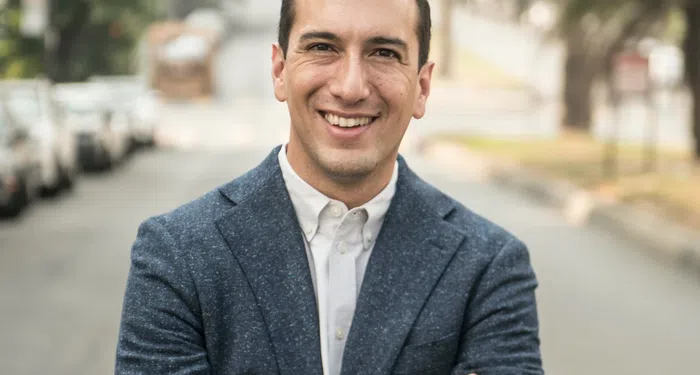
Jamil is a Professor of Psychology at Stanford and director of its Social Neuroscience Lab. He has spent more than 20 years studying how people connect.
He is also the author of Hope for Cynics, a book that makes a compelling case that the world may be better than we think — and that people may be better to each other than we expect, especially in times of crisis.
In our conversation today, we discuss:
- The real difference between a cynic and a skeptic — and why cynics may sound smart but are actually pretty naive
- Why Jamil compares so much of what we read and watch to “the ultra-processed calories of information”
- What AI is doing to people’s trust in one another, and how the same technology could be rebuilt to connect us instead
- And lastly, Jamil will introduce you to a practice called “positive gossip” — the habit Jamil’s family does at the dinner table, and which I think could make the world a whole lot better if everybody tried it.
I think you’ll enjoy it. Listen to our conversation with Jamil Zaki.
- [03:58] A Cynicism Generating Machine: Fifty years of falling trust, why Jamil’s Stanford students are not the selfish generation the stereotype claims, and the junk-food analogy for your news feed.
- [09:05] The Wallet Test: The Toronto Star dropped 20 wallets around the city with money inside. Readers predicted one in four would come back. Four out of five did. The story at the heart of Hope for Cynics, and why people are especially good when things go badly.
- [13:40] Cynic vs. Hopeful Skeptic: Cynics start with a conclusion and look for evidence. Skeptics think like scientists. Jamil on why cynics “actually are pretty naive,” and why the first step is to fact-check your own cynical thoughts.
- [17:10] Earned Trust and Psychological Brussels Sprouts: How treating people like “the folks you hope they are” flips a vicious cycle into a virtuous one, and what brain scans reveal when we give.
- [20:54] Positive Gossip: The dinner-table habit Jamil’s family practices, the red-car effect that explains why it works, and the late friend whose hope inspired the book.
- [24:25] A Recovering Cynic: Jamil turns the question on Frank, why this show is “a positive gossip engine,” and the neonatologist who did Jamil’s family a crazy good turn.
- [29:27] Turing Fatigue and the Social Router: What AI is doing to trust right now, why Jamil went back to blue-book exams, and how the same technology could be rebuilt to point us toward each other.
FRANK BLAKE: Perfect. Jamil, welcome to Crazy Good Turns. It's a great honor to have you on the podcast.
JAMIL ZAKI: Thanks very much, Frank. I'm glad to be here.
FRANK BLAKE: So, you're a Professor of Psychology at Stanford and the director of the Stanford Social Neuroscience Lab. Maybe you can explain for our listeners what social neuroscience is and what the director of a neuroscience lab does.
JAMIL ZAKI: Of course. I consider myself to have the best job in the world, but I'm sure there are many people who would not like it as much. Social neuroscience is the application of techniques to study the brain, but used to understand not just how we think and how we remember and see and hear, but how we relate to one another. How do our interactions with each other affect us, affect what we feel or think or do? How do we understand other people? And so, I think the point of what you do, why are we kind to people? So, my lab and I use, again, brain imaging and other physiological techniques to understand what happens inside us that affects our social lives.
FRANK BLAKE: Well, that's fascinating. I can imagine your classes are highly subscribed. How long have you been doing this? How long have you been teaching?
JAMIL ZAKI: I've been at Stanford for almost 14 years, but I've been a behavioral scientist and a social neuroscientist for more than 20. So, this is really the vast majority of my adult life has been pointed towards these questions. And again, very lucky for me, although maybe not for everyone.
FRANK BLAKE: So, one place I'd like to start is in your books and your writings, you point to a lot of decline over time in terms of levels of trust as revealed in various polls. And I'm curious, as you look at your students, what changes have you seen over the last 20 years?
JAMIL ZAKI: Oh, that is a great question. So, let's first stipulate that there is a decline in trust and it's a very sad thing. In 1972, about half of Americans believed that most people could be trusted. By 2018, that had fallen to a third of Americans, which is a drop as big as the stock market took during the financial collapse of 2008. And over that same period, Americans and people around the world have lost faith in all sorts of institutions, from education to science, to government, to media.
So, we're really living in a five-decade long trust deficit, whether we know it or not. How do I see this in my students and what do I see happening with them? Well, the first thing I want to say is I want to get right out in front of the stereotype that young people today are selfish or narcissistic. I see the opposite in my students and I think the data point in this direction as well. My students are very caring and they're globally conscious.
From a very young age, they're aware not just of what's happening in their town or city, but what's happening all over the world and that includes the suffering that's happening all over the world. They feel responsible for being global citizens in a way that I never did at their age. So, I think they're very good people in so many ways. I also think that being awakened to things like injustice and inequality and corruption through social media and through this global consciousness very early on might make it way harder to trust people than it might have been for us at their age if we had a smaller view of the world.
FRANK BLAKE: Do you think there's an element to which social media monetizes cynicism and that that's one of the things that drives its economic engine?
JAMIL ZAKI: I would say that social media and frankly media in general, too much of it is a cynicism generating machine that both creates and profits from our mistrust in one another. There's a bunch of evidence that people first of all pay lots of attention to negative information. We're almost evolved in a way to pay lots of attention to threats because we need to stay safe. And media capitalizes on this and says, "Well, if we want clicks, if we want eyeballs, if we want views, what are we going to show people? Well, show them negative stuff."
And there's evidence for this that people click more on negative headlines. There's also evidence that over the last 25 years, headlines both in legacy and social media have become more negative. They include more anger and fear. And I think that I actually don't even blame media companies for this. They're just serving what consumers want. But look, consumers also often want unhealthy foods, which is why ultra processed calories are everywhere. And you can think of what social media is giving us as the ultra-processed calories of information, which are not making us any healthier, but which we crave.
FRANK BLAKE: That's a great analogy. That's a great analogy. So, lots had been written and I'm curious whether you share the point of view of the increased tribalism of our society. We go into our tribe and we just borrow deeper into our tribe and have the point of view of our tribe and that leads to a distrust of people outside your tribe. Do you see that in your students? Or do you see with that social awareness less of a tribal attitude? Because from a distance, it looks actually more tribal at a student level.
JAMIL ZAKI: Well, I think people feel very much under threat. They feel as though folks that they disagree with are not just people they disagree with, but are people who would harm them if they could. That's new. I mean, we've always disagreed as a country, but more than at least in the last century, we also experience what's known as emotional polarization where we dislike people on the other side more than we used to.
We don't want to be around them. We avoid people who we disagree with much more than we did just a couple of decades ago. I think that one thing that I keep on coming back to though is that as divided as we are, as tribal as we are, as you nicely put it, we think that we're way more tribal than that, which is known as false polarization.
And again, to your last question as well, the media makes us feel as though we're more different from each other than we really are and that amps up the threat that we feel and increases our sense that we really have nothing in common with other people. So, oftentimes, for me, one of the solutions, and we can maybe get to this later, is simply getting offline and having analog conversations, which are actually a lot less scary than we often imagine they would be.
FRANK BLAKE: So, that ties into your book, which is a really interesting book, Hope for Cynics. And you talk about collective illusions where we think that our neighbors and others are actually more selfish than they actually are. In your research, what do you see as the, if you can call it the real rate of human goodness versus what we perceive it to be?
JAMIL ZAKI: Yeah, it's tricky to answer that question because the real rate of human goodness depends on how you measure it. If you ask how much people donate to charity, you can ask how much they help a stranger in a laboratory task. You can look at how much people donate blood or volunteer. There's so many forms of goodness out there and so many different ways to measure it.
So, I wish I could tell you 60% of people act in a good way 80% of the time or whatever. But in fact, what I know to be true from the science is not that people are good or bad. I think that's almost a theological and philosophical question. What is very clear is that people are better than people think they are. So, you can ask people to estimate what percentage of others will be donating to charity or volunteering and over and over again, people underestimate the kindness and trustworthiness and general positivity of others.
FRANK BLAKE: No, you had an interesting example in your book of Toronto and you might describe for the listeners that example or other examples that come to mind that prove that point that you're making.
JAMIL ZAKI: I'll give you two. So, one which you're alluding to comes from the Toronto Star in 2008, I believe, did a social experiment where they dropped 20 wallets around the city of Toronto and these wallets had money in them, but they also had a way of basically, they had an identification that somebody who was kindly inclined could actually send the wallet back to the person that it belonged to, could turn it in basically.
And they asked their readers, the star did, "What percentage of Torontonians do you think will actually return these wallets?" And the average Torontonian thought that this would be 25%, that three out of every four people would keep the wallet themselves and only one out of every four would return it. The actual rate of return was not 25%, it was 80%. A super majority of people gave these wallets back. And I think it tells that, to me...
FRANK BLAKE: And you don't think that's just Canada?
JAMIL ZAKI: And you know what? People immediately started joking about Canada, and then some researchers replicated this around, I think, 50 countries around the world and the rates were lower in some countries, they were higher in others. But the one thing that was common is that everywhere you went, people underestimated how many people would return the wallets, which tells me two things. One, people are pretty great. And two, we don't know how great people are.
Another example comes from not just everyday life, but what we do during disasters. So, in 2023, I surveyed a thousand Americans and I asked them, "What do you think happened to human kindness during the early pandemic? Do you think that people donated to charity, volunteered and helped strangers more than they had before the pandemic? Less or about the same." And only 20% of people who I surveyed believed that kindness had gone up during the early pandemic. But in fact, it went up enormously all around the world.
So, not only are people better than people think they are, but people are especially good when things go badly. The worst times that we go through often expose the best parts of humanity.
FRANK BLAKE: And from that data, how does that connect to neuroscience? What's happening in the brain that's supportive of that?
JAMIL ZAKI: Well, one thing that neuroscience exposes quite clearly is our attention to threatening information to negative stuff. I mean, at the heart of the puzzle of cynicism is if people are so great or often, I'm not saying people are always great, but if people are often so great, why do we think that they're so terrible? And I think one reason it has to do with our attention and what you can see in brain imaging studies is that threatening information really attracts our attention. The brain tunes in to things that we think could hurt us. And again, I don't think that's a bad design feature for a brain to have. I mean, you can imagine half a million years ago, our ancestor who was freaking out...
FRANK BLAKE: Pretty useful to have that.
JAMIL ZAKI: Yeah, exactly, exactly, yeah.
FRANK BLAKE: So, one of the purposes of your book, I think, is to help people move from being a cynic to being a hopeful skeptic.
JAMIL ZAKI: That's right.
FRANK BLAKE: First off, what do you mean by that contrast? What's a cynic versus a hopeful skeptic? And then, maybe take us through some of the things that you've found and that people might want to think about as part of that journey.
JAMIL ZAKI: Yeah. So, I think that people often don't realize that cynicism and skepticism are different things. So, let's just do that right away.
FRANK BLAKE: Let's start there.
JAMIL ZAKI: Yeah, absolutely. Cynicism is the assumption that people are selfish, greedy, and dishonest and you start with a conclusion, and then you just look for evidence that supports that conclusion. Skepticism is not assuming that people are great or assuming that they're terrible. It's waiting for evidence to see who you can trust and when. It's basically thinking like a scientist and the evidence is pretty clear that cynics, although they sound smart, actually are pretty naive and often get people quite wrong, whereas skeptics are able to learn more efficiently and effectively.
They're more agile in the social world. Hopeful skepticism is understanding that when we think like scientists, positive surprises will be everywhere because people are better than we think. So, the more we pay attention, the more we will understand that. I think that we can go through steps to practice hopeful skepticism if you like.
FRANK BLAKE: Yeah, that'd be great. Let's do that. What would be some steps that you'd recommend for the listeners?
JAMIL ZAKI: I'd say the first step frankly is to be skeptical of our cynicism. Oftentimes, we are very confident in our negative assumptions about other people and we don't question other people's negative assumptions either. I can't remember who said it, but somebody said, "Always predict the worst and you'll be hailed as a prophet. Economists have predicted 25 of the last two economic downturns." There's a truthiness to negativity.
I'd say the first step to hopeful skepticism is to take that away, to be skeptical of your cynicism, fact check your cynical thoughts and ask yourself, "What evidence do I have to support this?" And oftentimes, you might find that you don't have that much evidence at all.
FRANK BLAKE: So, I'm curious, and this isn't just from your perspective in a university, but maybe more broadly, do you think we have the right institutions to help develop hopeful skepticism?
JAMIL ZAKI: That's an excellent question. I think that we have the right institutions or at least the institutions that could help us develop hopeful skepticism. Are they actually being purposed in that way? I think often not. You consider how people operate in business. Their instinct is often to micromanage other people, to over contract every single interaction. That signals a lack of trust between people.
And actually, erodes, for instance, workers' engagement when you could use the same organization, the same workplace to show that you have faith in the people who are on your team and encourage them to be independent and trusting as well. Schools, we teach our students to watch out for strangers as though everybody is out to get them. We could instead use those same classrooms to teach people about how generous and friendly and kind most people are. So, I think we have the infrastructure to develop hopeful skepticism, but oftentimes it's just being pointed in the wrong direction.
FRANK BLAKE: So, you talk about our stories about each other becoming self-fulfilling. How do you correct that? I mean, I think as you say, people get maybe more points for the negative than the positive.
JAMIL ZAKI: Yeah. Well, one is to change that. I mean, I'm trying with my writing and public education to get people to understand that we don't need to put cynicism and negativity on a pedestal. But I think that to your question, how can we develop this between each other? I mean, one thing is to tell different stories. Negative stories become self-fulfilling because if you don't trust somebody, if you think that they're selfish, you're going to treat them as though they are selfish.
And people notice when you're doing that and they don't like it and it brings out their worst, but you can tell a different story. You can treat people like they are the folks you hope they are instead of the folks that you fear they are. So, you can take leaps of faith on them, for instance, give them more responsibility, confide in them, show them that you believe in them and that flips the self-fulfilling prophecy. It turns it from this vicious cycle of bringing out people's worst to this virtuous cycle of bringing out their best, which is called earned trust. When people realize that you trust them, they're actually more likely to become trustworthy.
FRANK BLAKE: Is there a neuroscientific difference between acts of generosity and acts of cynicism?
JAMIL ZAKI: Oh, interesting. There's not a lot of neuroscience on the difference between generosity and cynicism, but there's a lot of neuroscience on the difference between generosity and selfishness.
FRANK BLAKE: Okay.
JAMIL ZAKI: And the story there is quite interesting and counterintuitive. For a long time, the assumption was we all like being selfish that's like psychological chocolate, but we choose to be generous because we're supposed to. It's like psychological Brussels sprouts, the thing that we're supposed to do, nothing that we want to do. But brain science has really overturned that.
It turns out that when you act generously, whether it's donating to charity or giving money to a stranger, the parts of your brain that light up are literally the same parts as when you eat chocolate or when you receive a gift from somebody else. At the level of our biology, giving and receiving are really quite similar because both are very positive experiences. I think that's one of the most beautiful parts about human nature is that being there for others actually is pleasurable, even in some cases more than doing something selfish.
FRANK BLAKE: So, I was listening to somebody talk the other day who was making a comment on politics or downstream culture and making the comment that we are communally impoverished in terms of being able to recognize and see acts of generosity and exchange acts of generosity. Do you think that's roughly right? Or you disagree with that?
JAMIL ZAKI: I think it's right. I mean, Robert Putnam and many others have talked about the way that the structures of social bonds are falling apart now. People spend way less time together than they used to. They spend much more time alone. They live alone more often. They take part in fewer groups of all sorts, and I think that does leave us communally impoverished.
It's interesting that this person connected that with acts of kindness because you can technically donate to charity and volunteer on your own. You don't need a community to do that, but it's much more likely that we will act communally when we are in community. And I think it stands to reason that even though people do lots of kind things for each other in isolation, maybe those don't come through for us as much. Maybe they don't enter the stories that we tell as much if we're not doing it together.
FRANK BLAKE: How has your research impacted your role of being a parent?
JAMIL ZAKI: Oh, that's a great question. One thing that my family and I do that I cherish is what we call positive gossip. So, I think it's so easy to gossip about the negative stuff that people do, the jerk that you ran into earlier today. My wife and kids and I, we try when we can, not every day, at dinner to share one story about an act of kindness that we saw that day.
FRANK BLAKE: Oh, terrific. What a great habit.
JAMIL ZAKI: I think so. I'll tell you what, it helps us in two ways. One, I love hearing my kids' stories and my wife's stories. But two, when you know that you're going to share something, you notice it more. Frank, if I told you...
FRANK BLAKE: Hold on.
JAMIL ZAKI: Yeah. If I told you tonight at dinner, I want you to tell your friends and family about all the red cars you saw today, guess what? You would see more red cars. It's not that you would encounter more red cars, but you would notice them more. And if you know you're going to talk about kindness, you see it, you notice that it's everywhere around you. And so, I think what we talk about becomes what we think about as well.
FRANK BLAKE: That is a great parental as well as human best practice. That's really, really excellent because I do believe if you start telling those stories, you notice them more and it brings out something in yourself as well, really, really amazing. Good for you.
JAMIL ZAKI: I know that you've been a leader for a long time and this is something that I tell leaders in all sorts of communities to try out. I mean, whether it's a company or a school or a hospital, positive gossip can be an enormously powerful way to alert people that their colleagues and friends and classmates are actually doing great things all the time. And practiced as a community, it can fight cynicism and build hopeful skepticism in, I think, quite powerful ways.
FRANK BLAKE: Yeah. Well said. Well said. So, who are the writers or people that influence you, both whether it's personally or in your work?
JAMIL ZAKI: Oh, wow, that's a great question. Somebody who really inspired my work on cynicism is Rebecca Solnit. She's a great writer, fellow San Franciscan who writes a lot about hope. One of my favorite books of hers is called The Paradise Built in Hell. And she talks about disasters throughout history. The 1906 earthquake here, 9/11, Hurricane Katrina, the bombing of London during World War II.
And she talks about how in the media you hear that after these disasters, there's looting and people assaulting each other and everyone falls apart. But if you look at the historical record, all of these events produced enormous kindness and solidarity. So, she really inspires me. But really, the person who has inspired me most over the last few years is my late friend and colleague, Emil Bruno. He was a peace neuroscientist, meaning that he studied tribalism in the brain and what we can do to help people connect across difference. But he was also one of the most hopeful human beings I ever knew.
He died far too young of cancer. And when he died, I took it upon myself to try and take on even just 1% or 2% of the hope that he had carried throughout his life. And that really is what inspired me to write hope for cynics. He really is the protagonist, the hero of that story.
FRANK BLAKE: Well, since you're pretty candid in the book and saying that it also reflects your own journey with cynicism, how's that going?
JAMIL ZAKI: Thanks for asking. I always say that I'm a recovering cynic, not a recovered cynic, not an ex-cynic. Look, and if there's anyone listening who feels cynical, the last thing that I want to do is for that person to feel judged. I don't think cynicism is a useful way to encounter the world, but that doesn't mean that it's not natural. We all feel it and it's completely human to feel that way. I still do quite often.
The diference between how I am now and how I was five years ago is that when I feel cynical, I also recognize what's happening to me. I recognize that media sources are pulling me towards negative information. I recognize that my brain is focusing on the negative instead of the positive. And I recognize that that's probably hurting me in the communities that I'm part of. And I ask myself, "Could you do this differently?" That's all. That's the only difference.
And it's a practice of mindfulness. It's a habit. It's not something that gets fixed overnight, but it's something that I continue to work on. How about you, Frank? I'm curious to hear, do you consider yourself a cynic sometimes, a hopeful skeptic? How do you experience this and how do you work on it?
FRANK BLAKE: So, I would say I have the same journey, the same set of struggles. It's hard not to... So, there's a balance, and this is great to be talking to a neuroscientist about this. But there's a balance of observation over life that people have an incredible capability to convince themselves that their own self-interest allies with everyone else's interest. And you see that over and over again, and that makes you veer towards cynicism.
And then, on the other hand, as we document on this show, there are people who just are out there doing incredible acts of kind every day and that takes you in the other direction. So, it's a work in progress.
JAMIL ZAKI: Has doing this show made you feel less cynical over time?
FRANK BLAKE: Oh, absolutely, absolutely. There are people who you'd say that there are people in the world doing what folks do for others. But sometimes, in large ways, sometimes in small ways, sometimes notice sometimes unnoticed is truly, truly inspiring and a good prompt to change my own behavior.
JAMIL ZAKI: In a manner of speaking, you can think of this show itself as a positive gossip engine, an anti-cynicism intervention even.
FRANK BLAKE: Well, when you said that, that is exactly what it is and what is designed to do. So, I've got a longer story about learning while I ran Home Depot about the power of, you call it positive gossip, I'd call it recognizing and celebrating people who are doing the right thing and how important that is within an organization.
JAMIL ZAKI: I love that.
FRANK BLAKE: Yeah. Just to pull someone literally or figuratively up on the stage. So, thank you for interviewing me. I think that shows already that you've transcended my capabilities. You're already far higher stage. So, I ask every guest who has done a crazy good turn for you in your life?
JAMIL ZAKI: Oh, wow. Gosh, my mind is racing with so many examples. I'll just share one that's personal, Frank. It's from a while ago, but it remains vivid to me. So, I have two daughters. My wife and I, we have two daughters. And our older daughter, Alma is 10 now and she's very healthy. She's perfect to us. She's always been perfect to us, but she also had a very difficult birth and she suffered a stroke during her birth. And even though she's recovered amazingly from that, her first few weeks, it was really touch and go. I mean, she was in the hospital. We didn't know what was going to happen.
And I remember just feeling pummeled by bad news and frightening information all the time. And the medical staff at the UCSF Intensive Care Nursery were like heroes to me. And there's many people I could name, but I want to just name Liz Rogers, who is still a neonatologist at UCSF, who was the quarterback for our daughter's care. And I don't know how many hours she spent with us in those first three weeks. I kept on thinking, "Don't you have other patients?" But then, later for my first book about empathy, I shadowed her for a week and I saw that she did the exact same for everybody else.
It's amazing in these extraordinarily difficult moments, she managed to make each of her patients feel as though they had her full attention and humanity. And that's absolutely how I felt around her. I feel emotional just talking about it even 10 years later.
FRANK BLAKE: That's phenomenal. Well, thank you. That's a great example. I told you as we were starting this interview that I was going to ask you the obligatory question now about the impact of AI, excuse me, the impact of AI on your topic of research. Do you think it will have an impact on people's cynicism, skepticism, hopeful or not? And if no impact, why?
JAMIL ZAKI: Oh, it's already having a massive impact. And look, I'm not an AI doomer. I'm about to say a few negative consequences of AI for human connection, but I think that AI has enormous potential to make us more connected and to help us be more social.
So, I don't think this is how it has to be, but AI and large language models as they're currently constructed are doing a few things that I think are really bad for social connection. One, they confirm everything that we believe. They're sycophantic. So, there's a bunch of research that finds if you have an argument with somebody and then you talk to an AI about it, it tells you that you were right and it makes it far less likely that you want to make up or apologize to the other person.
I also think that AI makes it strangely difficult to trust what is even coming from a human being and what is not. I just wrote an essay this morning about what I'm calling Turing fatigue. That is the Turing test where you try to figure out if somebody is an AI or a human. I feel that when I get an email or somebody sends me an essay that they've written or a paper, I'm always running this test in my mind, "Is this really coming from a person or not?" And it's very alienating to think that somebody spent five seconds writing something that's supposed to be for you, and then passes it off as though they actually spent their mind and their time thinking about you.
There's this sense that people don't even care enough to use their hands to type, to use their brain to think when they communicate with me. And I think that can be pretty divisive. So, it makes us question what is real and what is human, which I think is a new type of question that can erode trust in new ways.
FRANK BLAKE: That's a great point. And it must be particularly difficult as a professor. I mean, that must just be a constant question, or are they not allowed theoretically to use AI?
JAMIL ZAKI: Frank, I've gone old school. I teach a big class, it's Psych 1 at Stanford. And when GenAI came up, we actually went back to blue book exams. You remember those?
FRANK BLAKE: Yeah, yeah.
JAMIL ZAKI: Blue book, yeah. So, we have students use their physical bodies in a closed classroom to write answers with a pen to our questions. And I know that's old-fashioned, but to me it makes it so that I can trust and because it's not that I think my students are cheaters. They're just so busy and we're all trying to save time.
FRANK BLAKE: No, the point about... I just was thinking about it from a professor's perspective that someone would use AI unless you in turn give it to just say, "Here, Claude ingest this and tell me what I should grade it." I mean, you've got a huge asymmetrical relationship between effort and on the student's part and effort on your part.
JAMIL ZAKI: It happens at work too. There's this amazing survey that came out last year about what's known as AI Workslop, which is when you send your colleague a memo or a slide deck or whatever that you have used AI to create. And 40% of people say that they've received Workslop from a colleague and it takes a lot more time to figure out what the heck this person is trying to tell you and what to do with it. So, it actually makes people trust their colleagues less and see their colleagues as less competent when they're receiving things that the person didn't put human effort into. So, I do think that it erodes trust at school, at work, and even in our society.
FRANK BLAKE: All right. So, you were saying you're not doomsday on this. What's the other side of the hill?
JAMIL ZAKI: I think that we could use AI differently. I think we could use it as what we might think of as a social router. So, AI, for instance, AI that understands us could tell us, "Wow, the last time that you were feeling this..." Let's say that you tell an AI, as many people do, "I feel really sad today or I'm feeling lonely." Instead of saying, "You're great, tell me all about it." And drawing you into a conversation with itself, AI could say, "Well, the last time you talked to your friend, Frank, and you felt a lot better afterwards, why don't you call him?"
Likewise, that same AI that when you've had an argument with a friend tells you, "You're absolutely right and you should cut that person out," whatever. But it could instead tell you, "Hey, have you thought about what this argument might have felt like from the other side?" You could imagine AI that challenges us to think more about each other and to be with each other more that is pro social instead of its current form, which I think is frankly pretty antisocial.
FRANK BLAKE: Well, that is brilliant and a great point to stop. This has been just a fascinating conversation. For our listeners who want to know more about you and more about your work, where should they go?
JAMIL ZAKI: I'm pretty easy to find. My lab is the Stanford Social Neuroscience Lab. My personal website is jamil-zaki.com. I do all sorts of work with all sorts of people to help them connect more effectively with individuals, with communities and with organizations.
FRANK BLAKE: Brilliant. Thank you so much, Jamil.
JAMIL ZAKI: Thank you. Thank you, Frank. This is fun.
From Frank Blake
My Sincere Thanks
Your support has helped take our little idea to celebrate generosity and good deeds and turn it into one of the most-listened-to podcasts available.
Thank you for being part of a community that celebrates people who do good things for others.
Please help us continue to grow by subscribing on your preferred podcast platform and sharing our show with friends.